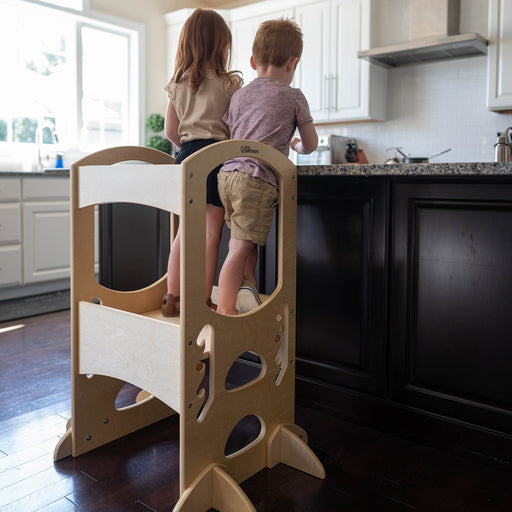
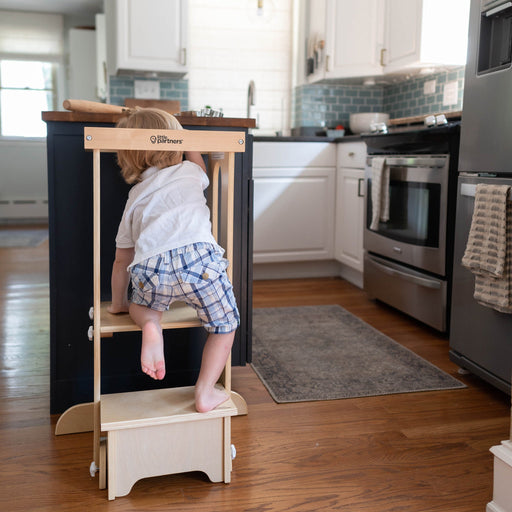
Watching a meal come together can be part of the activity: fruit goes into a bowl, ingredients are mixed, and something prepared together reaches the table. A learning tower gives a child a standing place beside the bench to see and take part in a small job. The task can be as simple as adding prepared ingredients while you handle the rest of the meal.
What can children join in at the kitchen bench?
Putting prepared fruit into a bowl, mixing cool ingredients or arranging toppings are small jobs that can belong within ordinary meal preparation. A kitchen learning tower brings the child closer to that work, with the ingredients and utensils for their part of the task within reach. The activity has a clear purpose: helping prepare something the family will share.
A child-sized role in a real task fits our approach to practical learning at My Playroom. Make room for a bowl and a spoon, offer a choice between two prepared ingredients, and leave the rest of the bench for the adult's work. The child has a part they can take on while you manage the food, equipment and pace. Naming an ingredient or talking about what comes next can be part of the same shared moment.
The kitchen still needs to be arranged for close adult supervision. Hot surfaces, sharp utensils, cords and other hazards must stay out of reach, and the tower's position must follow its instructions. A raised standing place does not replace an adult beside the child.
Which learning tower fits your kitchen?
The useful fit is a standing position that suits your bench, with enough floor space for you to work beside your child. A kids learning tower takes up room around the base as well as at the work surface. Picture where the bowl will sit, where you'll stand and how other people will move through the kitchen while the tower is in use.
An adjustable learning tower offers different platform positions. The suitable setting depends on the child's height, the bench and the model's instructions. Being able to see the task and reach its intended working area matters more than choosing the tallest setting. Platform adjustment changes where the child stands; it does not necessarily change the overall height of the frame.
Our Little Partners learning towers include adjustable platforms and different footprints. A compact footprint may suit a smaller kitchen, while a larger frame needs more room beside the bench. The individual dimensions help you judge which arrangement leaves space for both the shared task and the adult working alongside it.
Measure the space the complete tower will occupy, including the route past it. In a narrow kitchen, an open cupboard or dishwasher door can change the room available during preparation. A spot that works with everything closed may be less convenient during an ordinary meal, so use that everyday layout as the starting point for your choice.
Where will the tower go between tasks?
A tower used during breakfast preparation may need to move before the kitchen fills up later in the day. If it will move away from the bench after each activity, its overall size, weight and route to storage matter. Moving it around a corner or through a doorway is part of that decision, even when the final storage spot has enough room.
For a cupboard, nook or space beside furniture, the complete height, width and depth are useful measurements. Include any parts that project beyond the main frame and keep the stored tower clear of household walkways. Storage dimensions and any adjustable parts belong to the exact design; a smaller footprint alone does not tell you whether the whole tower will fit into a particular opening.
When does a learning tower suit your family routine?
A learning tower suits a task when the model's age and use requirements fit the child and an adult can stay beside them throughout. For a toddler learning tower, a birthday or an interest in reaching the bench is only part of the picture. The exact instructions determine the intended standing setup and use requirements.
A short job can have a place in the day without becoming the whole meal preparation. Adding one ingredient or arranging food on a plate gives the activity a natural finishing point. There is room to stop when the child is finished, while the adult continues with the remaining work.
Some activities call for sitting down with space to spread out. For drawing, puzzles or a seated snack, our kids table and chairs offer a different kind of child-sized setup. Choose a learning tower for shared standing tasks at the bench, then browse the designs with your kitchen space and everyday routine in mind.