A few recognisable food pieces can start a story without a full miniature kitchen. Bread and fillings suggest lunch; fruit in a basket suggests shopping; pretend treats on a plate suggest a celebration. The same ingredients can change their job when the child changes the menu.
Pretend food brings familiar meals into a story the child can change. Someone can decide what to make, gather the ingredients and arrange the result. There is no single finished meal to copy, so the play can stay with a favourite dish or become something entirely invented.
That flexibility matters in My Playroom's selection of pretend-play materials. Felt food and wooden food formats provide ingredients that can move between different stories, rather than props with only one prescribed use. A small, varied menu can leave plenty of room for the child's own ideas.
Build the menu around familiar food or a new idea
Familiar foods make an easy starting point because the child already has a place for them in a story. A sandwich can become a lunch order; fruit can be chosen at a shop; a favourite treat can be offered at a pretend birthday. The useful first purchase is often a group of pieces that makes sense together.
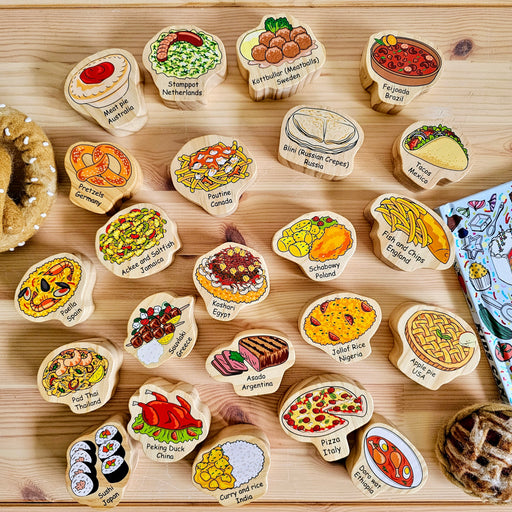
Our food formats include felt yum cha pieces and wooden Australian food themes. They show how a menu can reflect different meals and household experiences, rather than relying on one standard fruit-and-vegetable selection. These are examples of possible food stories, not a recipe the child needs to follow.
Adding a different food group can change play already under way. A few new ingredients might turn a snack counter into a lunch service or give a pretend shop something else to sell. That can be more useful than another large set that repeats the same foods.
The pieces can be grouped by the child's current idea. One basket might hold picnic food; another might contain ingredients for a shop. Keeping a small menu available makes the choices visible without displaying every food piece at once.
Loose ingredients or a ready-made play food set?
Loose ingredients suit a menu that is already taking shape, while a themed play food set can introduce a recognisable meal together. The difference is how much of the starting scene you want to provide. A few additions can extend existing play; a coordinated group can make a first gift feel ready to use.
Individual pieces are flexible across different meals. A pretend apple can belong in a fruit shop, a lunch basket or a picnic. Ingredients that work in more than one setting can remain useful when the child moves on from the first story.
A themed set offers another kind of starting point. Its foods suggest a particular meal, and serving pieces may give the ingredients somewhere to go. The contents matter more than the total piece count: a set of foods answers a different need from a box that includes several plates or utensils.
For a child who already has a kitchen or a collection of props, adding missing ingredients can be enough. For a first setup, a group that suggests one complete meal may make it easier to picture the play. Neither choice needs to recreate a whole real pantry.
Felt play food, wooden pieces and how they handle
Felt play food brings a soft texture to arranging and serving, while wooden toy food offers firmer shapes to pick up and place. That difference changes the feel of the ingredients without deciding which stories they can join. Soft and firm pieces can appear in the same pretend meal.
The size and form of the food matter alongside its material. A broad piece may fill a small plate, while several smaller ingredients can leave room for a more varied serving. Play kitchen food has no universal scale, so food, cookware and containers need to work together where physical fit matters.
A pretend basket can carry ingredients from a shop to a cooking area. A shallow tray can make separate foods easy to see. The container is part of how the menu is used, rather than something that has to match every piece or brand.
Age recommendations and small-part warnings belong to the individual product. Toy food is for pretend play, and realistic colours or shapes do not make the pieces edible. Material-specific care also varies, so the collection does not assume one washing method for every food format.
From the grocery basket to the next pretend meal
A shopping story gives the ingredients a different starting point. The child can select foods for a pretend list, arrange them on a shop shelf or carry them to the person making lunch. The menu provides something concrete to choose without needing a scripted conversation.
When the story needs a dedicated cooking area, our play kitchens provide the furniture choice. The food remains the menu: a few ingredients can move between the kitchen and another suitable play surface, while the room layout and worktop belong to the kitchen decision.
Pretend treats can also join kids tea sets when serving drinks becomes part of the gathering. Cups and teapots add that serving role; the food pieces can still return to a shop, picnic or cooking story afterwards.
For a gift, food tied to an existing interest can add something useful without replacing the whole setup. Shop toy food online with Australia-wide shipping, or explore pretend-play ideas at our Melbourne stores.